



For the last six years, the number of refugees worldwide has increased, now surpassing 68 million people. Here, Dr. Katie Nielson recaps her insightful SXSW EDU 2019 panel discussion on this topic with other leaders from higher education and workforce development.
Conteúdo De Aprendizagem,Metodologia De Treinamento,Tecnologia Educacional,Treinamento & Desenvolvimento
O valor do vídeo na aprendizagem de idiomas

08
fev
fev
It is predicted that videos will account for 82% of internet traffic by 2022, and there’s no question that online videos have become part of our everyday lives. So why not take advantage of the affordances that they offer for language learning?
Novidades,Tecnologia Educacional,Treinamento & Desenvolvimento
Nova pesquisa independente da AIR demonstra a eficácia da Voxy

04
fev
fev
A new, independent study by the American Institutes for Research demonstrates Voxy’s efficacy in significantly improving learners’ English language proficiency compared to learners using traditional language learning platforms.
Metodologia De Treinamento,Tecnologia Educacional,Treinamento & Desenvolvimento
Os benefícios da Voxy para iniciantes

07
jan
jan
One of the questions we get asked all the time about Voxy is whether or not the platform is appropriate for beginners. Here’s why the answer is a resounding yes.
Conteúdo De Aprendizagem,Metodologia De Treinamento,Tecnologia Educacional,Tendências & Insights Para RH,Treinamento & Desenvolvimento
O que é o conteúdo autêntico?

21
dez
dez
Language learning works best when learners practice with materials that are interesting to them and relevant to their goals. That’s why Voxy’s patented technology takes authentic pieces of media (articles, video transcripts, images, tweets, etc.) and turns them into English lessons quickly.
Metodologia De Treinamento,Tendências & Insights Para RH,Treinamento & Desenvolvimento
The Benefits of Live Instruction

18
out
out
Video conferencing software has made enormous strides in the last few years, and most people probably have encountered multiple applications that can easily facilitate virtual, face-to-face conversations with friends, family, and colleagues from phones or computers. In the “olden days”–that is, even just three or four years ago–tools like Skype or Google Hangouts would crash, […]
Estudos De Caso,Treinamento & Desenvolvimento
[Vídeo] Como a QTS e o Bloom Saigon impulsionam carreiras através do ensino de inglês no local de trabalho

12
out
out
A Quality Training Solutions (QTS) é um dos principais provedores de educação e capacitação em negócios na Austrália e na região Ásia-Pacífico. No Vietnã, seu programa de ensino de inglês, oferecido em colaboração com a Voxy, está ajudando inúmeros profissionais de várias organizações a avançarem em suas carreiras e melhorarem sua qualidade de vida.
Metodologia De Treinamento,Tendências & Insights Para RH,Treinamento & Desenvolvimento
Por que não sabemos quanto tempo leva para aprender?

09
out
out
Existem provas de que, em geral, a tecnologia pode levar oportunidades educacionais a pessoas que de outra forma não teriam acesso a elas, o que pode ter um impacto enorme nas vidas de milhões de cidadãos no mundo todo. No entanto, os cursos online disponíveis atualmente ainda tendem a ser cópias de suas versões presenciais e, quando o assunto é design educacional, continuamos carecendo de muita inovação. Talvez parte do problema seja que não estamos aproveitando tudo o que a educação impulsionada pela tecnologia tem para oferecer à ciência do aprendizado.

05
out
out
Last week I joined Kaplan’s Trending in Education Podcast to discuss Voxy’s approach to teaching English to non-native speakers, using technology to improve learning outcomes, and how applicable lessons I learned from experiences teaching english to non-native speakers might be to the broader space of online learning end education. Listen to the episode here.

02
ago
ago
Now more than ever, the education industry is focused on “gamification,” or creating learning activities from games. But many of the things that make playing a game fun are the same factors that make language learning hard. Let’s explore several ways game and language application designers can bridge this gap.
Metodologia De Treinamento,Tendências & Insights Para RH,Treinamento & Desenvolvimento
It’s Time for Language Learning to Embrace Individualized Instruction

03
jul
jul
We know from copious amounts of research that instruction works best when it is personal. Yet daunted at the prospect of sorting this out, many language programs revert to the outdated approach of just assigning everyone the same thing. However, maybe incorporating individualized instruction into a group curriculum isn’t as hard as it might seem.
Novidades,Tecnologia Educacional,Treinamento & Desenvolvimento
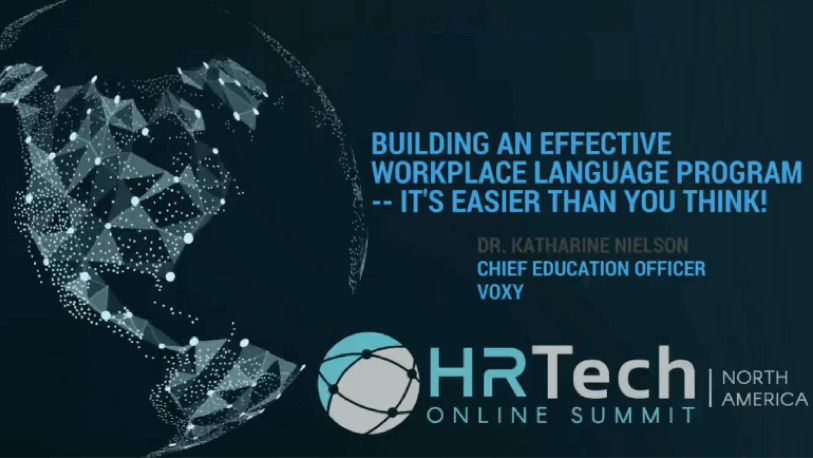
[Webinar] Como construir um programa de treinamento de idiomas eficaz no ambiente de trabalho—É mais fácil do que você imagina!
26
jun
jun
Neste webinar, a Dra. Katharine Nielson – Diretora de Educação na Voxy – discute as melhores práticas para implementar um programa corporativo de treinamento de idiomas.