
An L&D strategy grounded in data, statistics, and market information significantly improves the likelihood of receiving budget approval and leadership buy-in for your training initiatives.
According to the LinkedIn Learning Report, aligning training and development planning with business objectives is the number one priority for L&D leaders.
For this alignment, data from the training and human resources areas is essential. Therefore, we have gathered insights categorized by high-interest topics among human resources professionals, obtained from recent research and surveys conducted by reputable sources.
These data will serve as the foundation for the development of a L&D strategy for 2024, preparing your organization in the best possible way for future challenges. Good planning!
Skills Management
Skills-Based Organizations
To keep up with the rapidly changing market and evolving work technologies, skills have become the new division of labor, and many companies are turning into skills-based organizations.
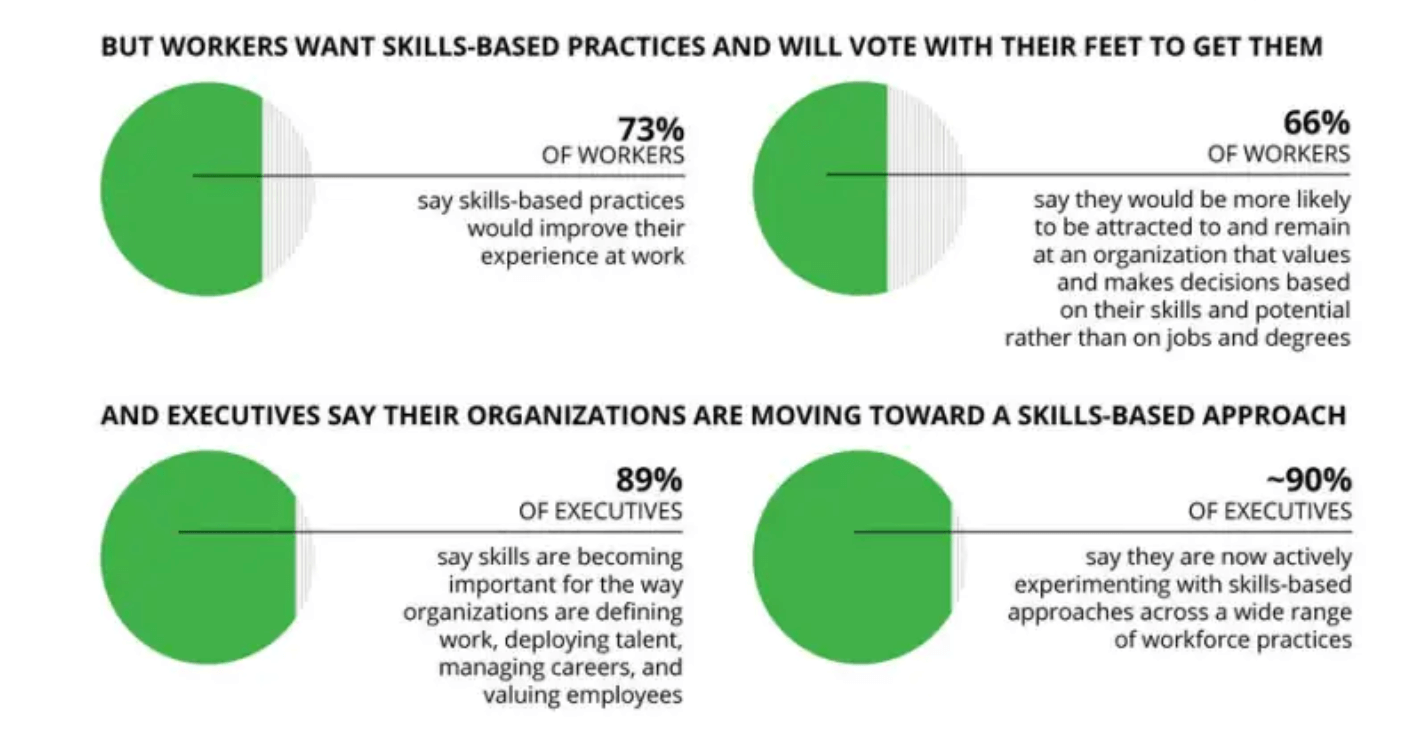
This survey by Deloitte, involving over a thousand professionals and HR executives worldwide across all sectors, indicates that 90% of executives are actively experimenting with skills-based practices.
The skills-based approach changes how the organization hires, trains, and develops its team, while also fostering greater diversity by reducing the focus on less accessible academic qualifications.
This data, as reported by LinkedIn based on job postings on the platform, shows a rapid growth in just a few years in job postings that do not require an academic degree as a mandatory requirement, increasing from 21% in 2019 to 29% just three years later.

The skills-based approach requires robust and ongoing upskilling programs and enables the company to revisit its hiring requirements to access a larger pool of talents. For example, hiring individuals who excel in specific job-related skills but may not have proficiency in a skill used by most of the team, such as fluent English communication.
Workers seem to agree with this model, with 73% stating that a skills-based approach would enhance their work experience.
High Demand for Soft Skills
We’ve just mentioned the increasingly staggering speed of market changes. This survey estimates that one-third of the skills required in 2025 are not currently included in job descriptions.
Given that there are no signs of this pace of change slowing down in the near future, soft skills (also known as power skills), encompassing the ability to adapt to change, communicate effectively, collaborate, and share knowledge, are in high demand.
This research indicates that occupations that require intensive use of soft skills will gain even more prominence, accounting for two-thirds of all job positions by 2030.
Emphasis on Well-being and Mental Health
The world of work has undergone drastic and unexpected changes, which have impacted various aspects related to the well-being and mental health of workers.
Increased Mental Health Challenges
A survey titled the Large Employer Health Care Strategy Survey recently revealed that 77% of large employers report an increase in cases of workers with mental health-related issues, marking a significant 33-percentage point increase compared to the previous edition of the same survey.
Compromised mental health has a negative impact on retention rates. A study by McKinsey consultancy shows that workers facing mental health difficulties are four times more likely to leave their jobs.
Workers expect companies to be part of the support network: an American Psychological Association poll revealed that 92% of employees consider it highly important for organizations to offer support for their team’s mental health.

People Expect More Workplace Well-being
Promoting well-being in the workplace is the most efficient way to proactively address the mental health of the team, and people are becoming increasingly aware of this.
In a workplace well-being survey conducted by Indeed, based on companies with over 1,000 employees, 47% of respondents reported that their expectations for workplace well-being are higher than just a year ago.
Well-being contributes to better retention rates: the same survey also indicates that 89% of people who feel well at work wish to remain with the company in the next year, compared to 55% of individuals with low levels of well-being.

But are organizations taking action to ensure productivity and job satisfaction through mental health and well-being care?
A recent survey by the Harvard Business Review reveals a disconnect in this area, with only 27% of workers stating that their company prioritizes the mental well-being of the team.
Leadership strongly influences people’s perception of the quality of the work environment. A survey called the Toxicity in the Workplace Survey, conducted with 8,400 professionals, showed that the impact of a toxic manager has consequences for both mental and physical health.
Participants led by toxic managers reported feeling more anxiety (51%), mental fatigue (44%), and physical effects such as headaches, sleep problems, stomach issues, and changes in appetite.
Challenges Ahead in Leadership Development
In various studies with different focuses, communication consistently ranks at the top as the most valued skill by organizations. In the context of the team’s relationship with leadership, communication barriers can have an even more significant negative impact.
The previously mentioned research on workplace toxicity, which underscores the importance of managers in this aspect, revealed that poor communication is the most frequently cited issue related to toxic managers, mentioned by 43% of respondents.
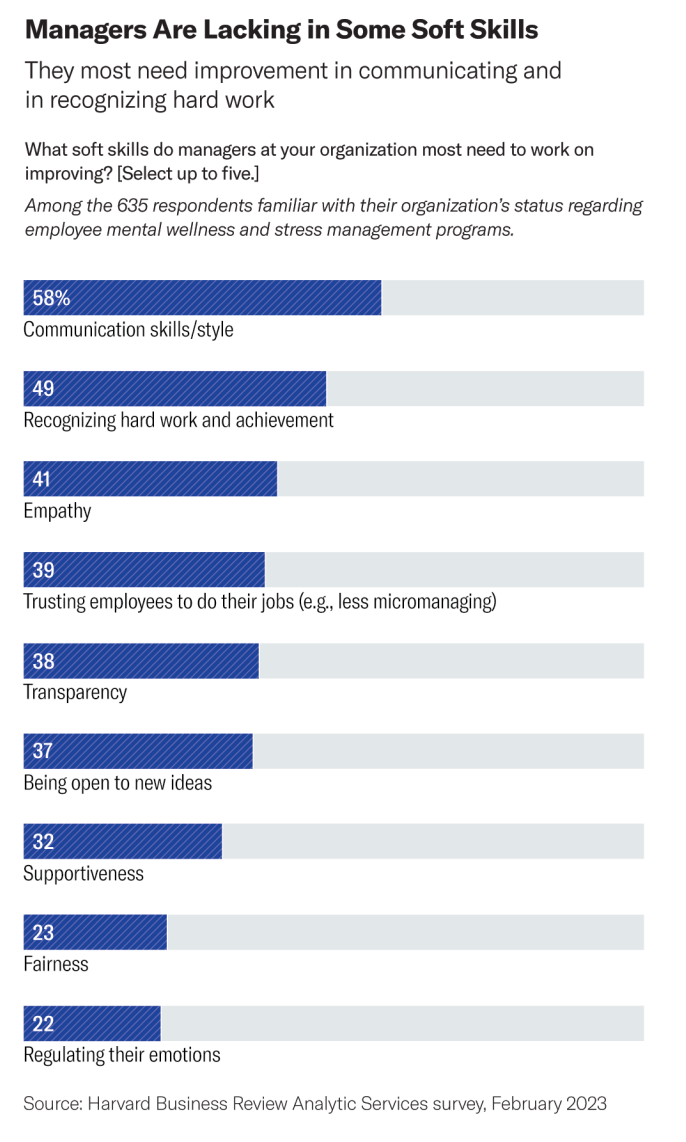
Further confirming from the perspective of subordinates, in a survey conducted by the Harvard Business Review asking about the soft skills that managers need the most, effective communication tops the list, mentioned by 58% of the respondents.
Leaders play a crucial role in driving the adoption of training plans within their teams, ensuring the well-being of their team members, and steering the company toward its long-term objectives.
This encompasses a lot to manage, and the numbers confirm the workload faced by leaders. In a survey conducted by Gartner with HR leaders, 75% stated that their managers are overwhelmed and burdened with more responsibilities than they can handle.
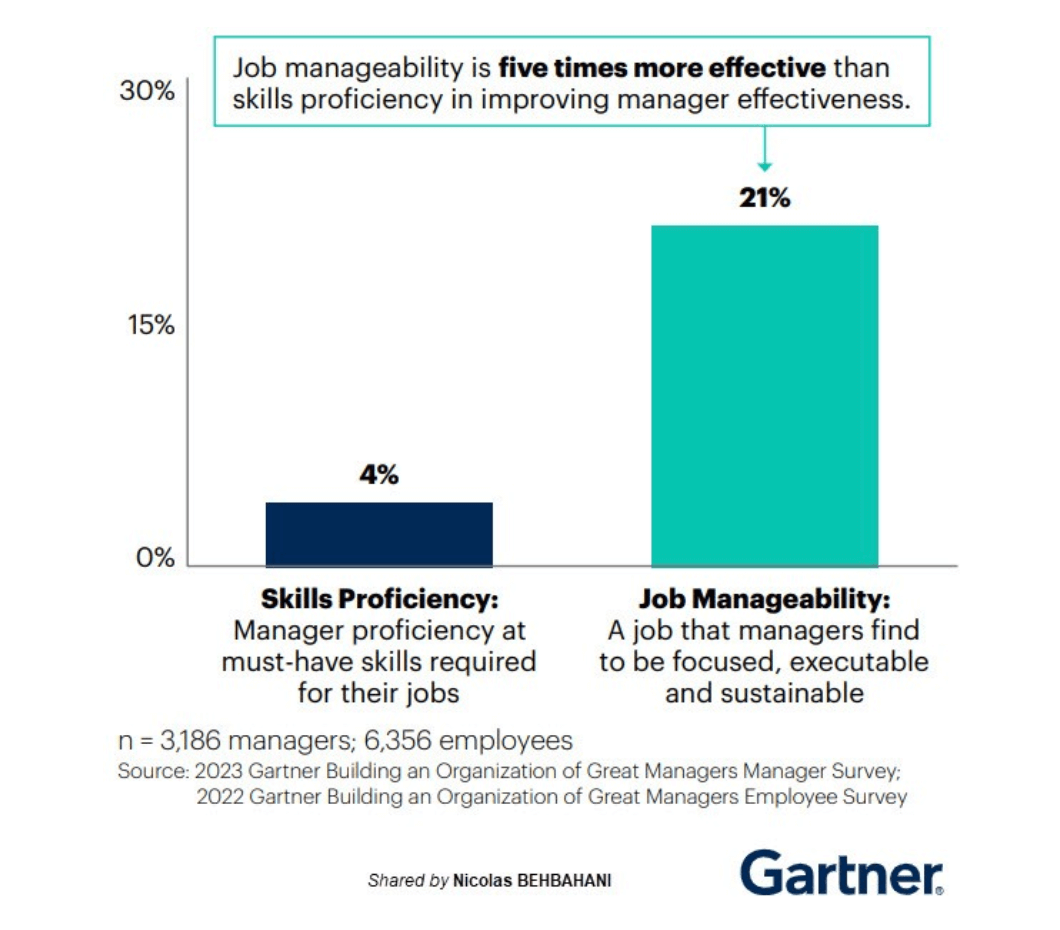
Many HR leaders have responded to the increased demands by increasing investments in development programs. However, 75% of managers express that these programs alone are ineffective without improvements in workload distribution and a realistic limit on the expectations of manageable responsibilities.
For the leaders in question, carrying out work that is focused, achievable, and sustainable is five times more important than upskilling. Therefore, a thoughtful and strategic plan is essential to ensure that leadership development initiatives do not overload the team.
Increasing Autonomy in Learning
The shift towards competency-based work, from hiring to internal recruitment, is shaping the reality of corporate learners who are taking more control over acquiring the knowledge they need to advance in their careers. Trends like lifelong learning and self-directed learning are increasingly prominent.
While individuals are taking charge of their professional development, the opportunity to learn on the job is highly valued by workers. A recent survey showed that 92% of individuals consider T&D opportunities when choosing between two job offers.
Flexibility in work is here to stay
Training plans need to consider this increased autonomy and the reality of hybrid and remote work, with opportunities for asynchronous learning and platforms capable of engaging people in their education.
A recent survey in the United States showed that 35% of workers whose jobs can be done remotely are now working from home 100% of the time. This number is lower than the 43% in the same survey in 2022 but considerably higher than the 7% pre-pandemic.
In a recent Gallup study, 60% of employees stated that they expect to work remotely at least once a week, compared to only 38% before the pandemic.
Another survey by Infojobs with employers showed that 41% of companies plan to increase remote work hires in the next two years, compared to 37% at the beginning of the pandemic in 2020.
Remote work is the most desired benefit by workers, and 65% of employers cited retention and attracting top talent as the reason for hiring remotely.
More Productivity, Yes – and More Sense of Isolation Too
When organizations offer complete flexibility compared to flexibility only around when and where employees work, the percentage of employees defined as high performers increases by 40%, according to Gartner.
The improvement in performance is due in part to the autonomy granted by flexibility and also because it significantly reduces the risk of burnout by providing a better work-life balance.
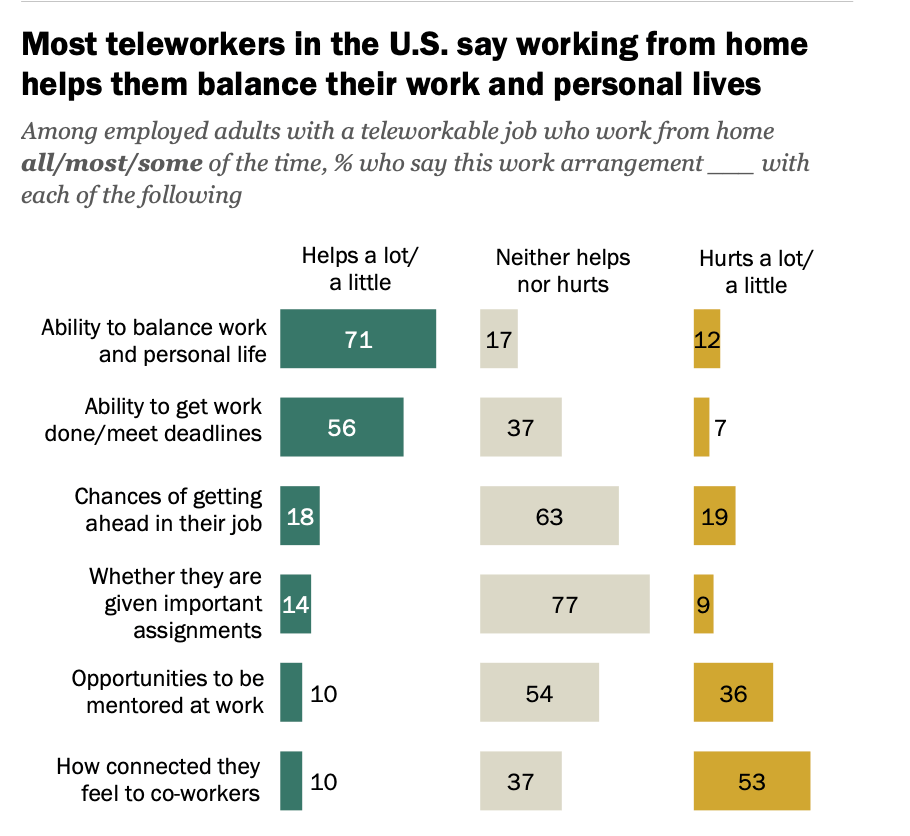
There are gains in personal life, but losses in terms of connection: in a survey of remote workers in the United States, 36% of respondents stated that remote work hampers mentoring opportunities, and 53% reported feeling less connected to their colleagues.
A healthy corporate culture becomes even more crucial
With greater demands for productivity and the ability to acquire skills rapidly, organizations need to be even more proactive in building a sustainable corporate culture for all involved.
In a Gallup survey asking a group of workers what they would change if they could change something in the organization to make it a better place to work, 85% of the responses were related to three categories: culture, compensation, and well-being. Engagement and culture were mentioned by 41% of the respondents.
The challenge for HR professionals is to translate this desire for a sustainable corporate culture into actions. In a Gartner survey that identifies priorities for HR leaders in the year, 47% of HR leaders are uncertain about how to drive the change necessary to achieve the desired culture.
Final Thoughts
A data-driven L&D strategy is crucial for budget approval and top-level support in training initiatives. Aligning L&D with business objectives is the primary priority for L&D leaders, and data from the training and human resources areas plays a critical role.
Organizations are adopting a skills-based approach, changing the way they hire, train, and develop teams, making job opportunities more accessible. Soft skills, such as adaptability, effective communication, collaboration, and knowledge sharing, are increasingly valued.
Employee well-being and mental health are critical topics, as mental health issues affect talent retention. Workers expect more workplace well-being and support for their mental health needs.
Leadership development is challenging, with communication being a crucial skill, and workload overload is a concern.
Workers have more autonomy in learning, with continuous and self-directed learning on the rise.
Workplace flexibility is a growing trend, with remote work opportunities and asynchronous learning.
A healthy corporate culture is even more essential, with a focus on engagement and well-being. Many workers desire a sustainable corporate culture, but transforming this desire into reality can be challenging for HR professionals.
Voxy is a business-focused language platform designed to meet the needs of teams and organizations. We offer certified instructors who specialize in job-related skills and provide short lessons that can be accessed from any device. Schedule a 15-minute session with Voxy to discuss your team’s specific requirements.