
Developing effective communication in the workplace is an increasingly important skill for people to work well in teams and achieve results, especially with remote and asynchronous communication becoming more common in the corporate world.
In this article, you will discover the 3 pillars of effective communication in the workplace for global teams, which are key to reducing friction, favoring knowledge sharing, and building success through improved communication.
Succeeding in today’s global economy is the objective of businesses in many sectors, and to achieve this purpose, many companies are increasingly relying on a workforce distributed around the world, that include people coming from completely different backgrounds.
The combination of varied professional experiences and the cultural nuances of diverse teams has been increasingly perceived as a positive contribution to offering products and services capable of satisfying the needs of the global market.
However, to have productive teams that deliver results, it is essential to foster good communication between the people that are part of it.
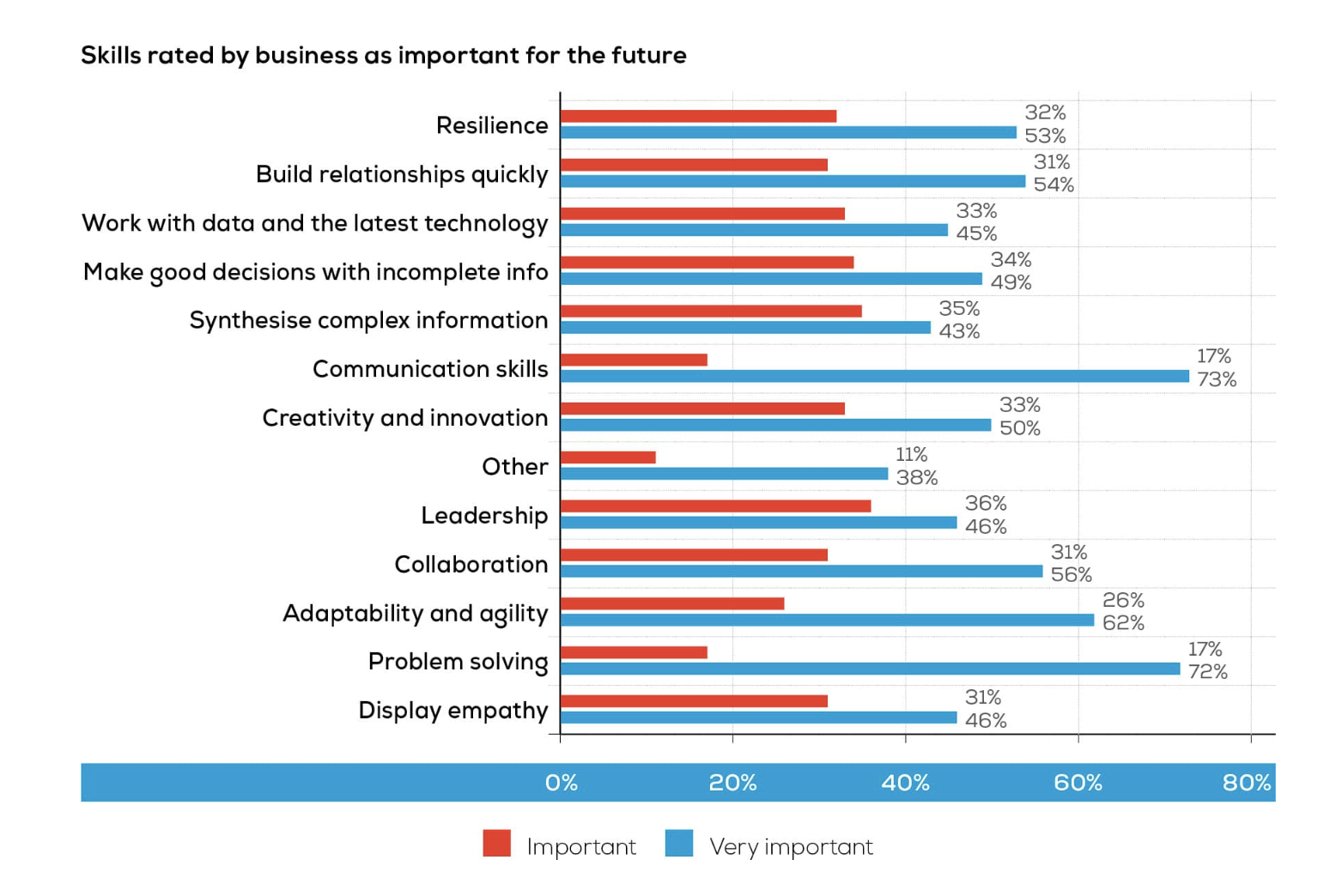
In a survey entitled The Future of Talent, communication skills appears as the most important skill from the employer perspective – and it is something that most schools do not teach, so it needs to be developed by teams and individuals who seek success.
Why is effective communication essential for business?
Fostering effective communication in the workplace is a way to ensure that teams carry out their tasks and projects in alignment with business objectives, especially for teams of different nationalities who speak different native languages but carry out a considerable part of their work in English.
Truncated communication can be the root of common problems in the day-to-day of global teams, such as low performance and productivity, lack of motivation, and lack of engagement and personal fulfillment at work.
We are also experiencing a moment in the market that sees many organizations changing their hiring processes, prioritizing a skills-based hiring approach.
Across soft skills (behavioral, personal or interpersonal skills, which cover emotional and practical conduct), the ability to communicate is the most valued.
Communication is one of the skills with the greatest potential for transformation, both for individuals and organizations.

What are the pillars of effective communication in the workplace?
Effective communication is a soft skill, not a technical skill, such as mastering a CRM platform or other job related tool.
Some people have a natural talent for communication, but that doesn’t mean that the ability to communicate well can’t be developed by individuals and teams.
Check out the three pillars that constitute effective communication in companies:

1. Day to day work communication
It is in basic day-to-day work activities, such as meetings and conversations, using shared team tools, that the foundation of effective communication at work is established and bridges are built capable of reducing the geographical, cultural, and social distances that separate global teams.
Some of the natural consequences of effective communication at work are:
- Encouraged creativity and better flow of information, when people in the team having no difficulty communicating their ideas and clarifying doubts when necessary, just as they would in their native languages;
- Knowledge sharing and dissemination of good practices and processes among teams;
- Delivery of tasks with more quality and speed, such as more attractive presentations and communications for colleagues and clients;
- Opportunities for people to represent the company at client meetings or corporate presentations;
- Creation of spaces for socializing and engaging in informal conversations that develop values such as empathy and charisma, helping to increase people’s satisfaction with work and the company;
- Faster and more effective communication in tools such as Slack, Skype or Teams, even if asynchronous;
- Improved active listening skill and understanding of varied accents.
2. Communication from leadership to teams
One of the main roles of leaders in organizations is to break down broader business objectives into actionable items for each of the people on the team, and that is why effective workplace communication is an essential characteristic of today’s leadership, especially in teams that work in a global context.
It is the role of leadership to make the entire team understand what is being said, avoiding gaps for misunderstandings.
From the leadership perspective, effective communication means:
- Communicate the values, goals, vision and changes in the organization, leading difficult conversations with the group and individually when necessary without creating frustration and mistrust;
- Leaders who communicate well instill confidence in the team and inspire people to take action and engage in projects;
- Provide opportunities for internal mobility to the team, allowing people to apply for positions that require constant and effective communication in English and the ability to lead in a non-native language;
- Confidently present plans and proposals to global customers and partners;
- Create a well-orchestrated onboarding process for new team members, providing support for a fast ramp up;
- Possibility to take broader leadership roles.
3. Communication to build company culture
One of the biggest challenges with the rise of companies working in remote, hybrid and asynchronous work regimes, is the dissemination of the company culture in these scenarios.
Companies with a strong culture that can be easily understood, perceived, and disseminated have teams that are more involved and engaged with the company’s success.
Here are some ways that the company culture can be built and fostered with effective communication:
- Creation of learning communities and discussion groups around important topics aligned with the company’s values and culture, such as environmental and social initiatives;
- Inclusion of all forms of diversity in the team, so that everyone feels part of the group and understood in their different contexts
- Opportunities for people to develop skills that are important not only for effective communication at work but also for improving communication in their personal lives, improving relationships with the company, career and people in their daily lives
- Construction of a lifelong learning mindset, to attract and retain people with an open mind, willing to question and seek positive solutions to the company’s challenges.
Developing effective communication in the workplace should be a goal for teams and companies committed to the people who compose them, their results and the future.
English is the language that connects the business world, and at Voxy your team develops effective communication skills at work that are applicable on a daily basis, with knowledge that can be applied in the tasks that make the most sense for each function.
Schedule a chat with someone at Voxy to understand how the team can gain fluency in business English for higher performance in the global market.