
Companies are increasingly focused on identifying the necessary soft skills during hiring. But is it possible to maintain a soft skills training program to enhance these skills in current team members?
Hard skills are specific, measurable technical abilities acquired through formal education, training, or practical experience, such as writing code, speaking a language, or reviewing a contract.
On the other hand, soft skills are interpersonal and behavioral abilities, such as:
- Effective communication
- Critical thinking
- Time management
- Constructive conflict
- Growth mindset
- Active listening
- Emotional regulation
- Curiosity and investigation
- Collaboration
These and other soft skills influence how a person interacts with others and manages their work.
Soft skills are the special ingredient that characterizes superior professional performance. Professionals with a strong combination of hard and soft skills tend to stand out, as they not only perform their tasks with technical competence but also collaborate effectively, lead teams in implementing ideas, and adapt quickly to new demands.
The rapid evolution of skills
Hard skills are changing at an unprecedented speed, driven by the rapid pace of disruptive technologies. The World Economic Forum predicts that by 2027, 44% of essential work skills will be significantly impacted.
Technology is evolving faster than companies can create and expand their training programs, especially global companies that need to keep technical training updated and localized at scale.
This is where soft skills make all the difference: with resilient professionals who have a continuous learning mindset, sharp critical thinking, and the ability to build strong relationships, companies can create a culture of learning agility.
In a culture of learning agility, professionals and teams not only identify and develop new skills but also implement, test, and adjust them according to the business demands today and in the future.

Rising demand for soft skills
The demand for soft skills is increasing: according to Deloitte, two-thirds of job openings will require these competencies by 2030, a significant increase from 2000 when they represented only half of the positions.
In the annual LinkedIn Workplace Learning survey, 91% of human development professionals agree that soft skills are becoming increasingly crucial for professional success.
Can they be developed?
Yes, soft skills can be improved. In fact, it is common for intelligent and ambitious people to continuously seek to enhance these skills to achieve more success in their careers.
Skills such as effective communication, problem-solving, collaboration, and emotional regulation are transferable and can be developed and refined over time. With targeted training and opportunities for practice, it is possible to strengthen these essential competencies to build high-performing teams.
Developing soft skills can accelerate the acquisition and adoption of hard skills—LinkedIn research found that 72% of executives agreed that soft skills are more valuable to the organization than AI skills.
A soft skills training program can be the key to taking your business to a new level of success and increasing team engagement. When workers have the chance to enhance skills that are essential for their current role, their future roles, and their personal life, they become more motivated and committed to their work.

Discover how to implement a soft skills training program that is aligned with the company’s objectives and enhances team performance and engagement.
#1 Assess the necessary soft skills in each team
To assess which soft skills need to be developed to improve performance in each department, you can use several resources:
- Conversations with department leaders
- Skills mapping
- Self-assessment surveys
- Performance evaluations
- Analysis of metrics and indicators
- Specific needs of each role
- Industry benchmarking
From the mapped soft skills, you will set improvement goals, such as:
- Increasing productivity through more effective time management (this study conducted with a group of companies identified a 14.5% increase in productivity of employees who received soft skills training);
- Improving the average score of post-service surveys in the customer success team with training in effective communication and conflict management;
- Improving strategic alignment in decision-making, which are the least automated tasks at work.
#2 Format the training program
Soft skills are not as objective as hard skills, so ideally, the program should include a variety of formats and integrate soft skills training with other company programs.
This holistic approach allows the program to contribute to an organizational culture based on growth (for the people and the business).
Some elements that can be part of a soft skills training program:
- Relevant content for the industry and real-world scenarios, such as real recordings of calls with difficult situations with customers and brainstorming sessions.
- Role-playing sessions, such as an objection-handling training for the sales team.
- Structured training available on online platforms helps scale learning and make it accessible to more people, asynchronously and according to each person’s pace.
- In-person sessions and workshops including idea exchange and experiences to foster engagement and practice.
- Book clubs with titles addressing the most critical soft skills for the business and knowledge sharing sessions.
#3 Include soft skills in all programs
A large company will have various types of training and development programs implemented, some including participants from various levels and departments, such as a language training program.
Although developing soft skills has a challenging aspect, which is the objective measurement of results, a positive side that can be well utilized is that all programs maintained by the company can serve as a backdrop for improving behavioral and interpersonal skills.
In mentoring programs, mentees and mentors can be guided to include improvement points related to soft skills, nurturing a growth mindset.
In leadership development programs, employees’ perception of the work environment is strongly influenced by leadership. A FlexJobs survey with 8,400 professionals showed that toxic managers can harm both mental and physical health, so the benefits of offering soft skills training to leaders are exponential over time.
Fluid communication, an essential soft skill for global teams
Languages are the foundation for effective communication in global organizations. By mastering a language, a person can build strong relationships globally and reach their full potential.
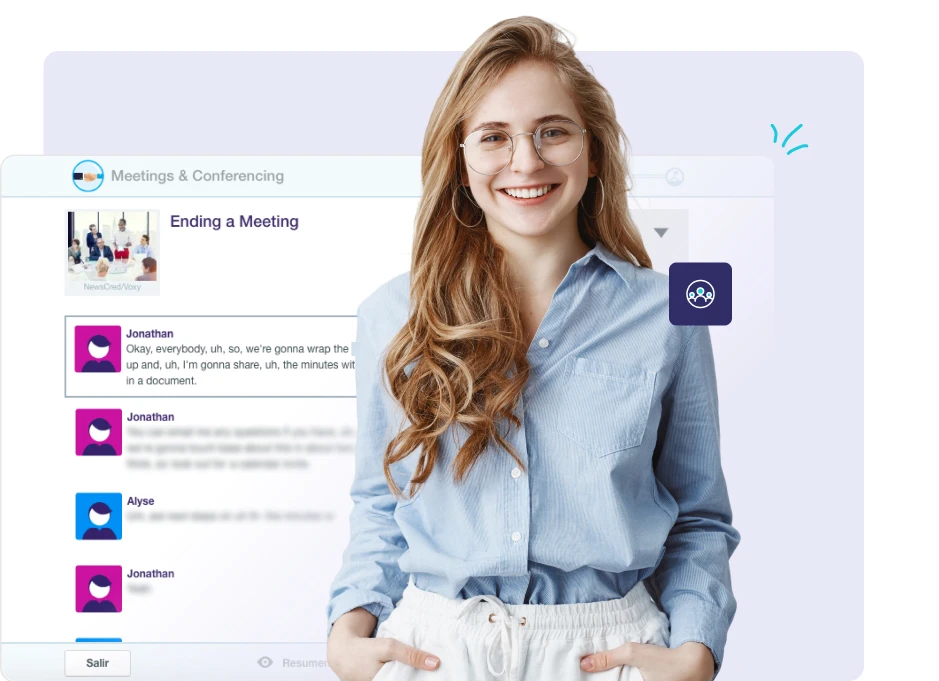
Content that encourages personal growth while improving fluency can have a significant positive impact on team performance. Voxy’s classes are designed based on the real needs of the current work environment, combining the development of soft skills with language fluency.

#4 Connect soft skills development to career plans
In performance evaluations, set aside time for discussions about the individual development plan and possible career paths, and the soft skills that need to be developed to take those steps.
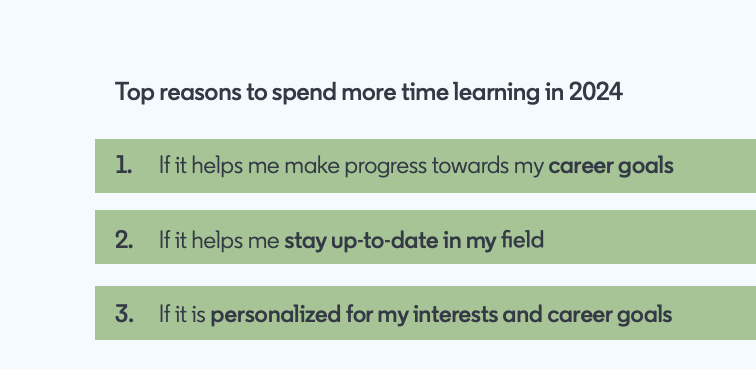
This LinkedIn study identified that people who master soft skills in addition to hard skills are promoted 8% faster than those who only possess hard skills. Developing a solid career is also the main motivation for people to engage in learning.
#5 Evaluating the progress of soft skills training
To measure the impact of soft skills training, it is important to have a well-structured monitoring plan composed of metrics and indicators that can be analyzed together to provide an overview of team development.
Monitor the progress of performance evaluations. In this study, 63% of people reported that soft skills training positively impacted their work performance.
Evaluate promotion rates and internal mobility rates. According to Google, the seven key characteristics linked to career success within the organization are soft skills.
Use the data obtained to keep the list of necessary soft skills for exceptional performance up to date, and schedule times to review the most relevant concepts.
With Voxy’s language program, your team improves their mastery of English and other essential languages for global success while developing skills that enhance performance in their roles. Click here to schedule a personalized assessment of your company’s needs.