
Promoting diversity in the workplace brings benefits to the business and contributes to positive changes in the societies where companies operate.
In recent years, organizations that take ESG (Environmental, Governance and Social) and DEI (Diversity, Equity and Inclusion) agendas seriously have been gaining prominence, while others are losing ground by not having initiatives that foster a diverse workforce.
In this article, we bring the importance of diversity at work and best practices to develop a corporate culture that sees diversity as a competitive differentiator to empower the organization and the world.
What does diversity in the workplace mean and what are types of diversity?
Diversity reflects the different groups that make up societies. Although race and gender are the most highlighted angles, there are many possible angles of diversity and they change as societies advance.
In today’s social and market scenario, some types of diversity are more present or relevant in companies:
Cultural: multiculturalism refers to people of different ethnicities, speaking different languages, and living in local societies with different sets of norms and habits.
Cultural diversity in the workplace is something very characteristic of multinational companies that hire, buy and sell all over the world.
Race or ancestry: social construction that groups people based on physical and/or ethnical traits.
Gender: refers to social constructions involving cultural, psychological, behavioral, and social aspects of being a man, woman, or other gender identity. Gender roles vary from society to society and change with the culture.
Sexual orientation: refers to a person’s pattern of emotional, romantic, and sexual attraction toward others.
Visible and non-visible disabilities: people with some kind of physical disability (that may or may not be visible).
Neurodivergencies: diversity in the way we process the world in relation to sociability, learning, attention, mood, and other functions.
Age: people of different ages and generations (X, Z, and Millennials) working together collaboratively and communicating effectively.
Religion: refers to different creeds and religions and the possibility of not having them.
Some other angles that should be on companies’ radar are groups such as caregivers, people in socially vulnerable situations, or people who have different socio-economic backgrounds and different experiences, among others.
A diverse work environment requires hiring people from different groups and providing an inclusive workplace that respects and welcomes these differences, from hiring practices to management and growth opportunities for diversity.
Developing and putting in place initiatives to promote diversity in the workplace is not quick or easy, but it pays off. Here are some of the key benefits:
What are the benefits of having diversity in the workplace?
See some of the key benefits to plan and execute initiatives for more diversity in the workplace:
Greater sense of belonging and engagement
People like to learn throughout their lives and forming collaborative teams composed of different social groups is a space for significant learning and personal growth, more engagement and more happiness at work.
When people realize that the company makes room to welcome different groups, diversity organically becomes part of the organizational culture.
Creativity and innovation
Similar people from similar backgrounds are more likely to think alike, and this is not a positive scenario for a company that wants to build an innovative company culture.
In a diverse work team, on the other hand, skills and backgrounds complement and enhance each other, turning the team into a fertile ground for creativity and innovation.
In this survey conducted by Forbes entitled Innovation Through Diversity, 85% of the people interviewed agree that a diverse workforce is crucial to get different perspectives and ideas that result in innovation.
More business opportunities
Both the investing market and consumers are increasingly eyeing companies that act for more diversity by incorporating ESG (environmental, social and governance) principles.
An increasingly popular agenda among businesses, the consumer market and investment firms, ESG summarizes organizations’ commitment to responsibility values and influence investment decisions.
An environment of multiculturalism at work also improves performance because the company can accumulate market knowledge from various regions of the world to facilitate global business expansion.
6 practices for building diverse teams
Well-executed strategies are needed to move the DEI agenda from being a broad goal to being part of the company’s day-to-day operations. Here are some suggestions:
1. Focus on skills
According to LinkedIn CEO Ryan Roslansky for Fortune magazine, skills are the new degrees when it comes to hiring, highlighting a skills-based hiring approach.
This means that companies are placing more and more value on the skills of the people applying and are less demanding about education and degrees, which are often linked to more privileged and heterogeneous social conditions and do not guarantee good performance.
This proposal, according to Roslansky, will result in a more efficient and equitable labor market, with better opportunities for all.
2. Review hiring requirements related to proficiency in other languages
Many jobs require the candidate to have advanced English. However, this makes it so that only those people who have had comprehensive access to language instruction in the past have an effective chance of applying for the position.
Revising the hiring requirements makes jobs more inclusive, as it is possible to implement intensive upskilling language training programs with highly trained instructors and with an exact focus on the person’s job duties and individual needs.

3. Promote cross-cultural initiatives
Working in multicultural teams is an opportunity to grow as a person and as a professional, as well as allowing people to build a diverse network.
Therefore, your company can offer special sessions with world cooking classes or wellness practices, opening up spaces and creating moments for people to share their differences and similarities.
4. Consider offering remote work opportunities
How about work that can be done remotely? A workforce in this model allows for increased geographic diversity, which in turn improves market understanding and unique human characteristics.
In addition, having a remote team expands access to talent that are true treasures and do not want to live in large centers.
The Voxy platform has a specific course with vocabulary, best practices and leadership made exclusively for organizations that work with remote teams.

5. Offer diversity training
Language and diversity training is of strategic importance for teams that operate globally, but there is still room for improvement. This survey shows that only 32% of companies offer diversity training.
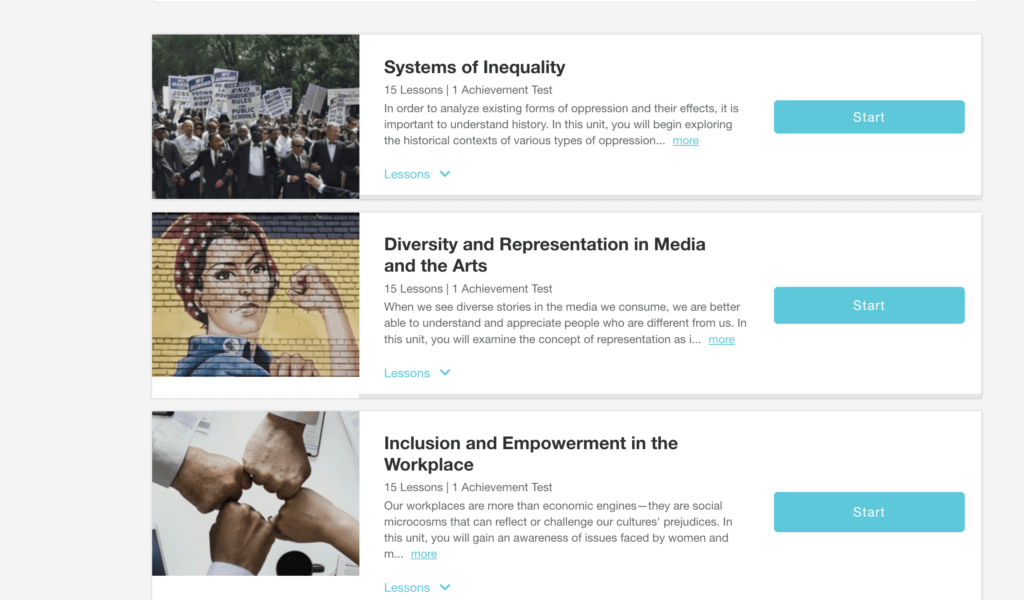
At Voxy, the team can advance in business English fluency while educating themselves on diversity in the workplace topics. Some courses available on the Voxy platform:
- English for Diversity, Inclusion, & Social Justice
- English for Cross-Cultural Training
- Environmental, Social, Governance (ESG)
6. Have clear goals and metrics
According to this survey, 76% of companies don’t have diversity and inclusion goals, so in order to make progress in building diverse teams you need to start by having clear goals and assignments for leadership.
Before setting goals, it is essential to run an annual survey to understand the social angles that are most represented in the organization.
Some types of diversity goals that can be set:
- Hiring goals
- Internal mobility goals (possibilities for advancement within the company)
- Training goals for everyone on the team
Read also: 4 Training and Development Trends for 2023
Conclusion
When well planned and executed, a strategy for more diversity in the workplace can positively impact the future of the organization, the products, the customers and the communities where the company is located.
Is building a team that welcomes diversity and multiculturalism for memorable results among your goals? Schedule a conversation with Voxy