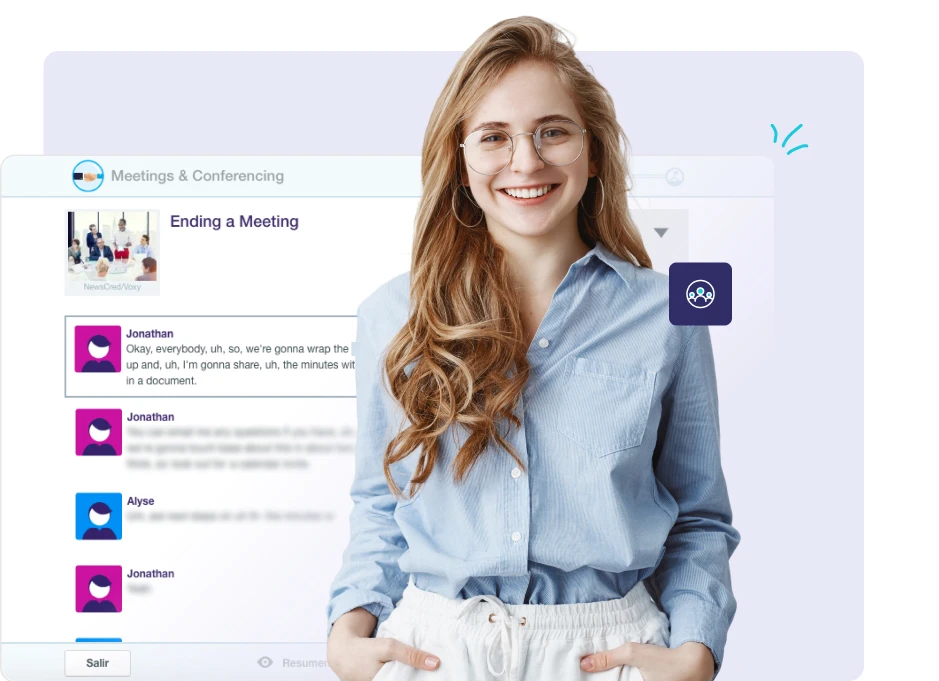

Featured Voxy Course: English for Cross-Cultural Training

Culture is a magical word that conjures up emotions around food, tradition, and social norms. Each culture lends us everything from beauty to innovation and can be equally impactful in the world of work. A range of cultural backgrounds adds unmatched diversity to teams and when teams are exposed to cross-cultural differences, they often outperform competitors. According to researchers from this popular Harvard Business Review article, non-homogeneous teams are smarter, leading to innovative, and more accurate group thinking. With English as the leading language of business, understanding the nuances of cross-cultural communication is vital. With this in mind, Voxy has curated an English for Cross-Cultural Training course. Let’s dive in.

Course Overview
In Voxy’s English for Cross-Cultural Training course, learners gain cultural awareness by reflecting on their own culture while broadening their understanding of global cultural differences. The intercultural skills developed in this course helps learners both navigate verbal and non-verbal communication, manage diverse or intercultural teams, engage in intercultural business, and more. Going further, we recognize that part of learning for the real world is continued exposure to different dialects and accents in English. For instance, in the “English Around the World” section of this course, learners have the opportunity to expand their English vocabulary more by gaining an understanding of regional differences in the English language. This particular section of the course also showcases global differences in English spelling, vocabulary, and pronunciation by listening to native speakers from the UK, USA, Australia, South Africa and Ireland, among others as they remark on what makes their English unique. We invite you to check out the full course curriculum.

Cross-Cultural Collaboration in Business
With much of the world’s business teams operating in a virtual space, as a result of our present day pandemic, the need to foster effective communication among employees is even more pronounced. Check out these recent stats¹ emphasizing the importance of cross-cultural training amongst teams in global business:

  • 23% of virtual teams don’t capitalize on their cultural diversity. 
  • 62% of corporate employees work in virtual teams with three or more cultures.
  • 76% of employees in virtual teams value cultural diversity and reckon that it improves their work output.

Ready to see Voxy’s career-aligned courses in action? Visit here.

———-

Footnote: 

  1. 46 Virtual Team Statistics You Can’t Ignore: 2020 Data Analysis, Benefits & Challenges by Finances Online

Shared this content

Subscribe to the L&D Flow

Get the best Learn & Development content in your email

Related content

How Voxy uses AI to transform language learning in companies

The conversation around AI in language learning has never been louder, but if you look closely at the L&D world today, you’ll notice a pattern: everyone talks about innovation, but very few actually change the

KnowledgeMotion Acquires Voxy, Expanding Its Global Leadership in English Language Learning

KnowledgeMotion, the holding company behind leading education brands Listenwise, Lingolift, and Boclips, today announced the acquisition of Voxy, a globally recognized platform for second language training. The combined organization will serve more than 1,200 customers

Learning languages in the flow of work: the future of corporate language training

For a long time, learning a new language meant sitting in a classroom — physical or virtual — far removed from your daily routine; however, that’s no longer the case. The line between learning and

4 Predictions for the Future of Workplace Language Learning

Learning languages at work is undergoing a major transformation. What used to be just a nice-to-have skill is now a real passport to collaboration, innovation, and career growth Today, mastering a new language at work

Collaborative learning: how peers accelerate fluency

Learning a new language can feel like a solitary challenge: just you, your notebook, and an endless list of vocabulary. But does it really have to be this way? The truth is that fluency begins

Intercultural communication: how to transform diversity into a competitive advantage

Intercultural communication is no longer just an optional skill; the truth is it has become essential. In companies with teams spread across different countries, cultures, and contexts, effective communication goes far beyond speaking the same

How to Adapt Communication to Lead Multigenerational Teams

Never before in the history of work have we had so many generations coexisting. According to the World Economic Forum, there are already five generations working side by side within organizations. This scenario brings unique

English for Global Leaders: How to Transmit Influence in Corporate Contexts 

Have you ever stopped to think that leadership today goes far beyond making strategic decisions? In an increasingly globalized market, leaders must communicate clearly, engage teams from diverse cultures, and generate real influence. And this