Have you ever stopped to think that leadership today goes far beyond making strategic decisions? In an increasingly globalized market, leaders must communicate clearly, engage teams from diverse cultures, and generate real influence. And this is where English comes in, not as a nice-to-have, but as an essential tool for those who want to inspire trust and make an impact in international corporate environments.
According to Voxy’s 2025 Global L&D Benchmark Survey, leadership development programs were chosen as the top strategy for companies facing today’s challenges. In other words, investing in leaders’ ability to communicate with influence is not a luxury – it’s a strategic priority. If you want your ideas to carry global weight, it’s time to combine language mastery with interpersonal skills.
Why Global Leadership Development Is a Priority in 2025?
Global leadership development has gained momentum because organizations need executives who master business English and possess interpersonal communication skills to thrive in international contexts.
Mastering another language goes far beyond knowing complex words and phrases. In international meetings, negotiations with partners from different countries, or high-stakes presentations, the way you communicate can determine the success of an initiative. Effective leadership requires clarity, empathy, assertiveness, and active listening. When combined with English—the dominant language in most global organizations—these skills turn communication into real influence.
External studies also reinforce this. The 2025 Global Leadership Development Study by Harvard Business Impact found that organizations investing in integrated development see significant improvements in engagement and leadership effectiveness.With the right combination of English and soft skills, communication stops being a barrier and becomes a powerful instrument of influence, directly impacting business outcomes.
How to Practice English for Leaders and Build Leadership Soft Skills
Studying grammar and vocabulary alone is not enough—you need to apply the language in contexts that truly matter.
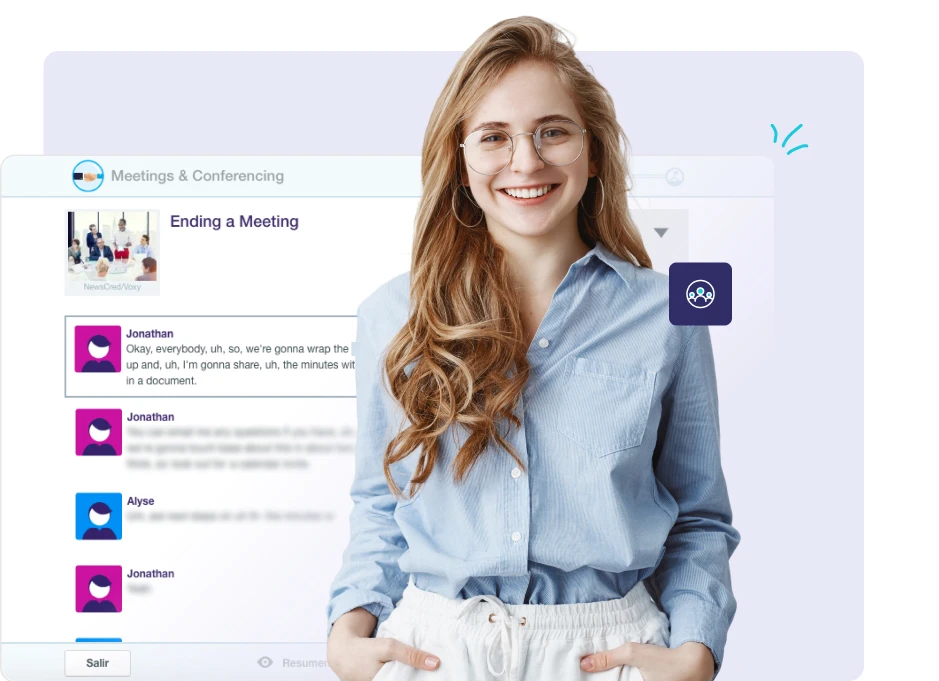
Simulations of global meetings in English for international business, for example, help to gain confidence and clarity when presenting ideas or making strategic decisions. Through feedback exercises and international negotiations, leaders practice the language while exercising empathy and assertiveness, strengthening their influence. Leading cross-cultural projects requires adapting communication and interpreting cultural nuances, developing interpersonal skills that are essential for global contexts.
In practice, integrated learning programs, such as those offered by Voxy, combine English modules with real leadership situations. This means that each language exercise also develops communication, negotiation, and engagement skills, making learning relevant and applicable to everyday life.
Developing Global Leaders: Integrating English and Soft Skills
For leaders who really want to transform their global performance, it is not enough to just study English or practice soft skills in isolation. An impactful leadership program combines language learning with the development of behavioral competencies, creating experiences that make sense in everyday corporate life.
This involves simulations of international meetings, mentoring with experienced leaders, feedback exercises, and contextualized microlearning. The secret of effective programs is the balance between practice and reflection: leaders need space to experiment, make mistakes, and reflect on their choices, understanding how their communication and decisions impact people and results.
Without a doubt, learning is continuous; therefore, successful programs do not focus only on immediate skills, but on sustainable growth, preparing leaders, both established and emerging, for current and upcoming challenges. By integrating English and soft skills into real leadership scenarios, learning ceases to be abstract and becomes a strategic tool for influence, engagement, and tangible results.
Main Benefits of Combining English and Soft Skills in Global Leadership
Investing in this combination brings concrete impacts for leaders and companies. Those who can communicate clearly in English gain confidence and global presence. Credibility naturally increases because well-delivered ideas generate respect and inspire teams and stakeholders—even on the other side of the world.
Teams led by professionals who combine English for executives and leadership soft skills tend to be greatly engaged. Leaders who know how to listen, give clear feedback, and make themselves understood in multicultural contexts foster greater participation and talent retention. The team feels part of something bigger, strengthening both culture and business results.
Another direct benefit is that decision-making becomes increasingly assertive. Precise communication prevents misunderstandings and reduces errors in processes, meetings, and international negotiations. When the message is clear and aligned with objectives, time is optimized, and results are more consistent.
Finally, mastering English along with interpersonal skills opens doors to international opportunities. Leaders prepared to operate in global contexts participate in strategic projects, expand their networks, and take on prominent positions. The combination of language and soft skills turns learning into real influence, broadening impact and accelerating careers.
Next Steps for Leaders
If you want to become an influential global leader—or support your leadership team in making this goal a reality—start by identifying opportunities to practice English in real contexts within the workplace. Encourage a feedback culture, create moments that cultivate social learning and transfer knowledge into practice, encourage participation in international meetings, promote involvement in multicultural projects, and combine all this with soft skills training.
Remember: global and international leadership is about connection, clarity, and influence. English is the tool that allows these qualities to become tangible and transform the impact of your work.
Voxy offers language training designed to reflect real corporate life, with courses tailored to different industries, departments, and roles. Our content helps professionals gain confidence in real work situations—from writing clear emails to participating in global meetings. Powered by AI and microlearning, our digital solution enhances team communication and unlocks your workforce’s full potential. Schedule a demo today.