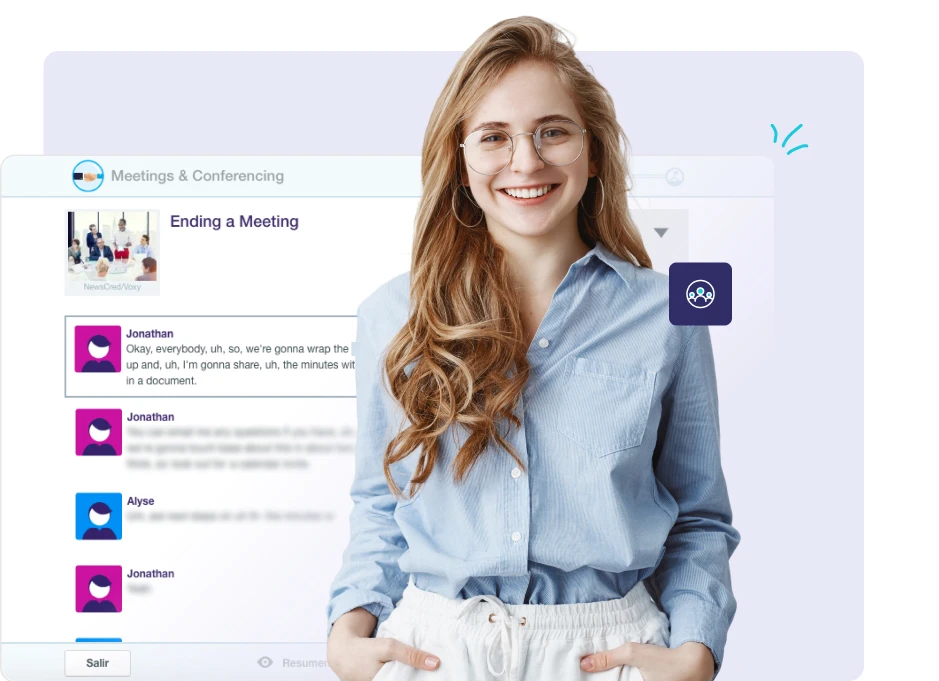

Business English is an area within English language learning, aimed specifically at the demands that are part of the work routine of companies that operate globally, whether with teams of different nationalities or clients spread around the world.
In this article, you will understand the strategic importance of business English fluency for teams to deliver peak performance and learn about strategies to build a team fluent in business English.
The strategic importance of business English in global teams
Due to a number of factors that have become even more pronounced in recent years, it is increasingly common for companies that operate globally to also have teams composed of people of different nationalities and cultures, often in hybrid or remote work arrangements.
As part of ESG initiatives for a more diverse and inclusive workforce, global companies are beginning to review their hiring requirements for English fluency.
This makes room for talented people that have no fluency in English but have all the necessary skills for the job, so that after hiring they go through upskilling programs to learn job-specific English.
Some areas such as information technology and finance have a vocabulary that is highly based in English, but in many organizations, business English gives access to more possibilities, whether in buying, selling or hiring.
In addition to more competitiveness, having people on the team with business English proficiency brings opportunities for improvement for many typical day-to-day tasks of global teams:
- Giving presentations and conducting meetings with optimized use of time
- Quick and clear communication with the team by email or tools such as Slack or Teams
- Access to more suppliers and better negotiation skills
- Internal mobility opportunities, increasing career and leadership possibilities for non-native speakers
- Increased loyalty and engagement due to the company’s investment in the team’s professional development
In short, the goal of business English is that people on the team can do their jobs with full access to their skills, at the same level of excellence they would do in their native languages.
7 strategies to accelerate fluency in global teams
Learning English for the work that each person does depends on some initiatives that can be implemented by leadership to improve fluency:
#1 Assess the demands of teams, roles, and individuals
Some companies choose to offer face-to-face classes in the office, but with this option, people end up having little progress in mastering business English because they learn in classes with people who are at different levels and have different demands at work.

There are ways to do skills mapping beforehand to determine a training plan that not only fits the subjects of interest and initial level of English, but also aligns with the specific role the person plays, such as English for sales.
#2 Create a mentoring program
Mentoring programs are a way to foster collaboration between people in the organization, and aim to give mentees access to expertise and guidance from more experienced professionals.
To accelerate English fluency, when setting up the program, create opportunities for people to be mentored in English. Often it is outside the comfort zone that the greatest evolution happens!
#3 Opt for short, targeted classes
One of the main challenges for fluent professionals is the lack of time to dedicate to study, especially in leadership positions.
One way to overcome this issue is to opt for a platform of short classes focused on specific skills, such as a person presenting results for a client taking a one-on-one class in an executive English course with a certified teacher to talk specifically about best practices and vocabulary for the meeting.

#4 Create collaborative groups with multiple nationalities
Collaborative working groups make sense when the organization wants to advance an agenda that cuts across multiple departments, such as the adoption of a new system, an inclusion and diversity initiative, or discussion of social topics.
Take advantage of these opportunities to bring people from different seniority levels and nationalities together.
#5 Provide opportunities for informal conversations
There are tools made especially for building connections within the company by scheduling quick conversations with people from all sectors within the organization who wouldn’t have the opportunity to connect otherwise.
At Voxy we use Donut, an application for Slack that automatically schedules meeting rounds. It’s an opportunity for the team to become fluent in English, which can provide fruitful moments, such as connecting with the CEO of the company for a quick conversation.
#6 Train the team on the company’s own content
In addition to choosing business English training focused on day-to-day work skills, another strategy is to transform the company’s own content into training.
On the Voxy platform, strategic content such as the culture code, recordings of sales calls, and technical training can become customized lessons for the team to become familiar with the vocabulary and terms most used in the company and the market.
#7 Make room for everyone to participate
In English meetings that are repeated periodically, organize a schedule for each person on the team to open or close or present some context.
A significant part of achieving fluency in English is actually being exposed to discomfort, which as practice progresses, becomes less uncomfortable.
Choosing the best business English training
LIFOW (Learning in the Flow of Work) is one of the hottest trends in the area of training and development and stands for learning in the flow of work, that is, learning as needs arise in the day-to-day conduct of work.
Therefore, before looking for a training solution to build a team fluent in English, it is essential to map out which competencies need to be developed and topics that may be relevant in the team’s professional training.
What does your team need to do masterfully in English? What topics are relevant? These are the questions that will guide this list.
Here are some of the skills that are most sought after by professionals in Voxy’s business English training:
- Communicating faster and more effectively by email, message or phone
- Making engaging presentations in English
- Conducting meetings in English in a confident manner
- Vocabulary for managing projects
- Engaging in informal conversations with co-workers
In addition to skills that are common to various positions and industries, some specific guidelines are especially important for some industries and departments, such as:
- ESG practices
- Customer service
- Diversity and inclusion
Conclusion
More efficient than the conventional English learning method, a business English training is able to meet the specific needs of the market.
But training alone does not solve everything: it is necessary to implement strategies that give the team the opportunity to advance in English fluency, to the point of being able to perform to the full extent of their abilities in day-to-day tasks with colleagues of other nationalities.
Voxy is the platform of choice for multinationals around the world to train their teams with group and private classes and content drawn from news and real-life content, with short lessons that fit into busy schedules.
Schedule a conversation with the Voxy team to understand how to map your company’s English needs and outline a plan for your team to achieve fluency.